Ever think about teaching? Here's an intro on what it takes to land an entry level teaching job.

Entry level jobs in Museum

Looking for more jobs in Museum? Check out the most recent job postings in Museum.

Below you'll find all of the companies that we've covered that may offer entry level jobs in Museum. You can also look at internships in Museum.

Martha's Vineyard Museum Logo

I spent at least a week every summer on Nantucket until I was 18. It was also a great time, and it’s where I have some of my fondest childhood memories. Oddly enough, I’ve only stepped foot on Martha’s Vineyard once. I was flying from Nantucket and the plane stopped on the Vineyard. I got out for some fresh air (it was a tiny plane) and got right back on. That means that I’ve never visited the Martha’s Vineyard Museum in Edgartown, MA, but I’m sure it has a lot in common with the museums that I’ve visited on Nantucket. The museum is “dedicated to furthering an interest in, experience of, and appreciation for the history and culture of the Island and its environs.” That’s exactly what you’d expect, and they do this with exhibitions, collaboritive educational programs, scholarly research, archival collections, and community outreach.

Read the full article →

Museum of Latin American Art Logo

Despite the fact that I come from an extremely artistic family (Dad – architect, Mom – graphic designer, Sister – painter), I know almost nothing about art. So it shouldn’t surprise you that I know even less about Latin American art. But if I did want to start learning about it, I’d probably head to the Museum of Latin American Art in Long Beach, CA. It’s a non-profit organization that “educates the public through the collection, preservation, presentation and interpretation of modern and contemporary Latin American art in order to promote cross-cultural dialogue.” It was founded in 1996, and since then it has doubled in size.

Read the full article →

New York Transit Museum

by on November 26, 2011

New York Transit Museum Logo

Transportation is essential to Thanksgiving as we know it. A large majority of our country’s population travels for the holiday, whether it’s a few miles or a few thousand miles. Sometimes it actually seems easier to travel across the country than it is to travel across town (can you say gridlock?), so it’s surprising that our country’s biggest city is actually pretty easy to get in to, out of, and around. For more than a century New York City has had an exceptional transit system, and its history is remembered and displayed at the New York Transit Museum. As far as I can tell, the museum is a non-profit that is directly tied to the MTA. It’s also “one of the city’s leading cultural institutions and the largest museum in the United States devoted to urban public transportation history.”

Read the full article →

Chemical Heritage Foundation Logo

When I was a kid, I had my own chemistry set. It was pretty cool–I could do things like change the color of a liquid by mixing a few different powders. Ok, so it wasn’t that exciting, especially after I learned that my Dad would make his own gunpowder and blow stuff up when he was a kid. After having a watered down chemistry set as a kid, I ended up having a completely inept chemistry teacher in high school. It should be no surprise that my interest in chemistry fizzled out, but if I wanted to get the reaction going again, I might look to the Chemical Heritage Foundation. They’re a Philadelphia, PA based non-profit organization that “fosters an understanding of chemistry’s impact on society” by “inspiring a passion for chemistry; highlighting chemistry’s role in meeting current social challenges; and preserving the story of chemistry and its technologies and industries across centuries.”

Read the full article →

Center for Puppetry Arts

by on October 15, 2011

Center for Puppetry Arts Logo

I have to admit that it gets a bit monotonous writing about non-profit jobs every weekend. There’s an endless number of organizations to cover, but so many of them are very similar to ones that I’ve already featured. But today I found one that is about as unique a non-profit as I’ve come across in my nearly four years of doing this. It’s the Center for Puppetry Arts in Atlanta, GA. They’re exactly what they sound like, an organization that “is the largest American organization solely dedicated to the art of puppet theater.” I’ll admit that I haven’t been to a puppet show in a while, but when I was a little kid I put on a mean one. Puppetry is an interesting art because it can be as simple as a sock on a hand or as complex as Big Bird. It may not get as much credit as other performing arts, but it’s definitely worthy of having an organization devoted to it.

Read the full article →

Chicago History Museum

by on October 1, 2011

Chicago History Museum Logo

I’m starting to get settled in my new place. After living in two moderately new high-rises in downtown Chicago, I’ve moved into a more historic building–it was built in 1921 and served as a Chinese consulate at some point. Now that I’m starting my fourth year living in the city, I feel that it’s only appropriate for me to start learning a little more about the city’s history. That’s why I should probably make a visit to the Chicago History Museum, which is just a mile down the street from me. Ironically, the museum, having been founded in 1856, “is the city’s oldest cultural institution,” though they pretty much had to start over after the Great Fire destroyed their building and most of their collection in 1871. Three years later there was another fire that destroyed most of what remained. Luckily, there haven’t been any more fires, so the Chicago History Museum has had a decent amount of time to build a new collection.

Read the full article →

Whitney Museum Logo

I’m no art expert, which is probably why most of the artists whose work I am familiar with are both European and dead. My knowledge of contemporary American art is pretty limited. Maybe that would change if I visited the Whitney Museum of American Art in New York, NY, as it’s the “preeminent institution devoted to the art of the United States.” My awesome sister (who is a painter now pursuing a career in medicine) gave me the heads up on the fact that they’re hiring. The Whitney Museum of American Art was founded in 1930 after sculptor Gertrude Vanderbilt Whitney’s offer to the The Metropolitan Museum of Art of a collection of more than 500 works was rejected. Much like taking her ball and going home, she took her art and started a new museum.

Read the full article →

Nantucket Historical Association Logo

I’m on Cape Cod for a wedding this weekend, so I decided to take my girlfriend over to Nantucket, MA for the day yesterday. I hadn’t been there in 9 years after going there every summer for the first 18 years of my life. It’s a wonderful island that is loaded with history. We walked around all day and made stops at the Old Gaol and the Whaling Museum, both of which are owned and operated by the Nantucket Historical Association. Both are well worth a visit, and so are all of the other NHA properties. If you want to learn about early American history, Nantucket is a great place to visit, and much of the reason is because of the work of the Nantucket Historical Association.

Read the full article →

Lower East Side Tenement Museum Logo

We often forget that this country has been built (and is continuing to be built) by immigrants. For hundreds of years people have risked everything that they had to try for a better life in America. While just getting here is a journey, the first few years of “making a new life, working for a better future, starting a family with limited means” can be daunting. The Lower East Side Tenement Museum in New York, NY tells the story of life in America for nearly 7,000 immigrants from over 20 countries who lived in the building between the years of 1863 and 1935. It’s a part of American history that doesn’t get a lot of attention (how many of us have visited colonial era museums?), yet it’s an extremely important part of our national identity.

Read the full article →

Museum of Food and Drink Logo

As someone who has been a part of both a startup company (this one) and a startup non-profit (board member), I think that starting a non-profit is the more difficult of the two. It’s not all that hard to start a small organization that does good work, but to be able to fund it on a sustainable basis feels nearly impossible in the early stages. You actually need to get people to have enough faith in you and your team to give you money to achieve your mission. If you can do that, you can probably succeed. That’s why I’m excited about the Museum of Food and Drink in New York, NY. In March they held a Get-the-Ball-Rolling Fundraiser that included cooking by David Chang, Wylie Dufresne, Nils Noren, and some other big names. To get these chefs behind a cause and to get enough product donated for a $250 a plate lunch is a big accomplishment. It sounds like the dinner was a big success, which hopefully means that the Museum of Food and Drink ball is officially rolling.

Read the full article →

Thomas Jefferson Foundation

by on February 19, 2011

Want to make a difference in your first job after graduation? MATCH Charter Public School is a great place to do so.

Thomas Jefferson Foundation Logo

It’d be pretty cool to have your home turned into a museum. Not only would it mean that you lived in a pretty sweet place, but it would also mean that you made enough of a mark on history for people to actually want to learn about your life. There’s no better example of someone worth learning about than Thomas Jefferson. Not only did he write the Declaration of Independence, but he was also the third president and founder of the University of Virginia. It’s no surprise that he ended up on both the two dollar bill and the nickel. Anyway, many might expect Jefferson’s Monticello to be run by the government, but it’s actually managed by a non-profit organization called the Thomas Jefferson Foundation in Charlottesville, VA. They’ve been maintaining Monticello and 2,500 of its 5,000 acres for nearly 90 years with a dual mission of education and preservation, which is why they have continued to keep it open to the public.

Read the full article →

International Coalition of Sites of Conscience Logo

I’m not a big fan of museums unless they’re super-focused on a specific topic. I get kind of bored looking at random collections of stuff, but when a museum or an exhibit tells a story, then I get interested. I’m sure I’d be fascinated at any one of the “Sites of Conscience” that are in the network of the International Coalition of Sites of Conscience, which is a New York City based non-profit organization that is “dedicated to helping historic sites inspire social consciousness and action.” The sites in the network are “specifically dedicated to remembering past struggles for justice and addressing their contemporary legacies,” and there’s a good chance that you’re familiar with at least one of them. Remembering our history is essential to moving forward on human rights issues, and the International Coalition of Sites of Conscience ensures that our history is accessible and delivered in a compelling way.

Read the full article →

National September 11 Memorial & Museum

September 11th, 2001 was supposed to be a great day for me. I was a senior in high school, and through the intricacies of my school’s scheduling system, I only had two classes scheduled that day. I was going to be out of there before 11 AM. Things didn’t go as planned, as the Head of the School made an unexpected appearance during morning announcements (the school was small enough that we could all meet in one large room). Something terrible had happened, but it wasn’t quite clear how bad it actually was. A couple friends and I immediately went to the beach across the street from our school. We knew that on a clear day you could see the Twin Towers, and September 11, 2001 was as clear as they come. We watched as a mass of smoke obscured the New York City skyline, and we listened to radio reports of what was going on. Luckily, many of the things that were reported on the radio about other possible attacks weren’t true, and the magnitude of the casualties from the attacks weren’t nearly as bad as we first feared (we thought there might be 50,000 dead in New York City alone). Still, there was a feeling of terror that none of us had ever faced before. I spent much of the day with other classmates, some close friends and some not so close. We went to another beach, watched the news at someone’s house, and went to a church service. September 11th is one of the days that has defined the world that I grew up in, and it’s likely that you feel the same way. It’s a day that I will always remember, which is why I am happy to see the National September 11 Memorial & Museum progressing. It’s supposed to open a year from today, and I’ll certainly visit once it’s open on the Ground Zero site.

Read the full article →

Hockey Hall of Fame

by on June 11, 2010

Hockey Hall of Fame Logo

I was out last night with some friends when a bus with a police escort came roaring down the street. I quickly realized that it was the Blackhawks, so we started cheering as Jonathan Toews stuck his head out of the back of a police car and showed his appreciation for our appreciation. We thought that was pretty cool and continued on our way. As I kept walking, I looked down the street and saw that the bus had stopped and that I could now see the Stanley Cup raised over the head of one of the Blackhawks players who got out of the bus. I ran down the street and snapped this picture.

Stanley Cup

Chicago has been partying since the Blackhawks won, and there’s no trophy more suited to partying that then Stanley Cup (I mean guys drink champagne out of it). The story of the Stanley cup is actually really interesting, and you can find it all on Wikipedia. The Hockey Hall of Fame, which is based in Toronto, Ontario, is the keeper of the cup, and they could provide some pretty cool job opportunities. We’re not getting a lot done here today in Chicago (it’s essentially a holiday) with a parade and the start of the World Cup, so I’m going to leave it to you to see if a job at the Hockey Hall of Fame is for you, but if that doesn’t work out, you can also check out jobs with NHL teams. I may be a bandwagon fan (and a late one at that), but you can’t not get excited when the Stanley Cup is being paraded around town.

Read the full article →

The Andrew W. Mellon Foundation Logo

You know somebody is rich when they have a foundation named after them. You know somebody is really rich when their kids have their own foundations. That was the case with Andrew W. Mellon. In 1940 his daughter Ailsa Mellon Bruce established The Avalon Foundation, and in 1941 his son Paul Mellon established The Old Dominion Foundation. In 1969, with the combined value of the foundations at $220 million, the children decided to merge their foundations in honor of their father. That seems to have been a good decision considering that The Andrew W. Mellon Foundation, which is based in New York City, has assets totaling $6.5 billion in 2007. In case you don’t know who Andrew Mellon was, you can read his story here. The short of it was that he was held in the same esteem as men like Rockefeller, Ford, Carnegie, Morgan, and Frick, but he differed in that “he excelled in four fields of endeavor: as a businessman and banker; as a politician and statesman; as an art collector; and as a philanthropist.”

Read the full article →

New York Hall of Science

by on February 28, 2010

New York Hall of Science Logo

In 1964 New York City hosted the World’s Fair for the third time. The fair was held in Queens at Flushing Meadows Corona Park, and it was dedicated to “Man’s Achievement on a Shrinking Globe in an Expanding Universe.” More than 50 million people visited the fair to see all kinds of cool exhibits—many focused on technology (you can read more about the fair on Wikipedia. One of these exhibits was the New York Hall of Science, which continues to operate to this day as New York City’s “only hands-on science and technology center.” It has been remodeled and revamped multiple times since 1964, and wide range of science focused educational programs. It looks like a really cool place to visit, even if most of their activities seem to be targeted towards kids.

Read the full article →

Academy of Natural Sciences

by on February 20, 2010

Academy of Natural Sciences Logo

For most of us museums are just places to go to visit for a day and to learn something new. We rarely think about what is going on behind the scenes, but we should. At many major museums there is also a significant research function. A perfect examples is the Academy of Natural Sciences in Philadelphia, PA, which sounds like a research institution, but it also runs a museum. In fact, The Academy is the “oldest natural science research institution and museum in the New World” according to Wikipedia. The Academy has been at the forefront of biological and earth sciences since its inception, and it continues to promote public education in those areas. Just to give you an idea of the scale on which they operate, their collections include more than 17 million specimens. That’s crazy!

Read the full article →

International Center of Photography Logo

I think that I take pretty decent photographs. I even won a fishing photography contest once—ok my friend submitted the picture that I took with his camera and took the prize for himself. My expertise may end with a point and shoot camera, but I’m ok with that. If I ever want to advance my skills, I’ll be sure to check out the International Center of Photography. They are a New York City based non-profit that runs “a world-class museum and school dedicated to exploring the possibilities of the photographic medium through dynamic exhibitions and educational programs.” They were founded in 1974 by photographer Cornell Capa, and since then they’ve been moving forward the art (and science) of photography.

Read the full article →

Minnesota Children's Museum Logo

Although I’ve never been there, I hear that the Mall of America is great. It’s an impressive spectacle of consumerism, and it’s a must-see if you’re in the Twin Cities area. However, I’d imagine that it’s not the most educational place to take your kids. Luckily, Minnesotans have the Minnesota Children’s Museum in St. Paul. It was named by Cookie Magazine as one of “sixteen road trip-worthy museums that put the emphasis on children.” The Museum is loaded with cool exhibits like Earth World, which focuses on local habitats, and Habitot, which creates exploration opportunities for toddlers. They also play host to exciting traveling exhibits like Dinosaurs, which will be arriving in 42 days (they have a countdown on their homepage).

Read the full article →

National Building Museum Logo

For nearly as long as humans have been around, we’ve been building shelters—places to sleep, eat, work, and play. And nearly as long as we’ve been building shelters, we’ve been doing it artistically. Function is still our primary goal—it’s the reason that we build things, but it’s amazing how development, architecture, construction and engineering, interior design, landscape architecture, and urban planning come together as an essential part of human culture. The National Building Museum in Washington, DC was started to “advance the quality of the built environment by educating the public about its impact on people’s lives.” Yes, it’s a museum filled with artifacts and objects related to the history of buildings, but it’s more than that. It’s really about “fostering lively discussion about a wide range of topics.”

Read the full article →

National Archives

by on July 3, 2009

National Archives Logo

Since I’m going to have a non-profit for you tomorrow, let’s start celebrating the Fourth of July today. Now, I know that you probably have fireworks, the beach, hot dogs, and hamburgers on your mind, but let’s take a minute to appreciate the Declaration of Independence. It’s the best “I Quit” letter in the history of the world. It’s like that letter that you wrote to your parents when you were 14 and decided that you were moving out, except it isn’t completely nonsensical. The Declaration of Independence has a lot to do with why this country is so great, so I hope that you’ll take a minute to give it a read today. And where do you go if you want to read the Declaration of Independence? The National Archives, of course! You can see the original document in all its glory, or you can check out a more readable version. If you’re not familiar with what the National Archives is, basically they “are the nation’s record keeper.” They preserve and keep forever 1%-3% of our government’s documents for both legal and historical reasons.

Read the full article →

Museum of Science Boston Logo

When I was a little kid, I was fascinated by science. Some of my favorite things to do were to wake up early on Saturday mornings to watch Mr. Wizard’s World, ask my Dad show me Chemistry experiments, and build all kinds of paper airplanes. I was just the kind of kid that would love the Museum of Science, Boston, and I’d still love to spend a day there if I ever get the chance. Their mission is to “stimulate interest in and further understanding of science and technology and their importance for individuals and for society,” and judging from their Flickr gallery, they’re definitely doing that. Some of their attractions include an IMAX theater, a Planetarium, a Laser show, a 3-D Digital Cinema, and an awesome looking Simulator that can take you under the sea or to outer space. That’s not even getting into the Museum of Science’s current exhibits. Boston’s Museum of Science looks like an insanely cool place to visit, and an even cooler place to work.

Read the full article →

Pro Football Hall of Fame

by on February 1, 2009

Pro Football Hall of Fame Logo

Happy Super Bowl Sunday! Last year on this day, we featured the USA Football, a non-profit organization that promotes amateur football. Since then we’ve taken a look at some other Super Bowl related jobs like the those with the NFL’s teams and with World Vision (they administer the donation of Championship paraphernalia that was produced for teams that didn’t win a championship). If you want to work in or around the sport of football, it’s a good idea to use all of the hoopla surrounding today’s events to generate ideas for your job search. That’s why we’re going to look at the Pro Football Hall of Fame today. Despite their strong ties to the NFL, they’re actually a non-profit organization based in Canton, OH.. Their mission includes 4 parts, and it’s what you would expect:

To honor individuals who have made outstanding contributions to professional football; To preserve professional football’s historic documents and artifacts; To educate the public regarding the origin, development and growth of professional football as an important part of American culture; and To promote the positive values of the sport.

If you love football, then finding a job at the Pro Football Hall of Fame would be pretty cool.

Read the full article →

Boston Children’s Museum

by on November 22, 2008

Boston Children's Museum Logo

I’m in the lucky position of having a girlfriend who has an 8 year old sister. That means that I have a built in excuse to continue to do “kid things,” even though I’m way too old to do them on my own without seeming creepy. Mini golf and bowling are certainly staples, although it’s not too weird for 20-somethings to do those (bowling with bumpers is another story), but one of my favorites is going to children’s museums. Not only do they provide a lot of fun, but they also always seem to teach me something. It’s amazing to see complex concepts explained with simple exhibits and toys. I also particularly enjoyed the “screaming booth” at one museum because I was able to max out the decibel meter. Now, the Boston Children’s Museum may or may not have a screaming booth, I don’t know, but they do have some exciting jobs for new college grads. That means that you can have a built in excuse to continue to do “kid things” just like I do.

Read the full article →

USHMM Logo

Four summers ago I had the pleasure of interning for Jill Weinberg, Midwest Region Director of the United States Holocaust Memorial Museum, or USHMM for short. Admittedly, my job consisted of a lot of clerical work. I became remarkably familiar with Microsoft Access, Microsoft Excel, and the paper cuts that you get on your tongue from licking envelopes over and over again; however, I also gained unforgettable knowledge and experience relating to crimes against humanity and genocide, both historical and current. The internship opened my eyes to world events, introduced me to compassionate and intelligent people, and gave me an excellent taste of what it is like to work for a non-profit, charitable company.

Read the full article →

The Museum of Modern Art

by on August 17, 2008

The Museum of Modern Art Logo

I am the black sheep of my family. My mom is a graphic designer, my dad is an architect, and my sister is a painter (although she doesn’t want to be labeled). I have no artistic talent whatsoever, and I barely have the ability to appreciate good art. That means that I’m probably not the best person to tell you about the The Museum of Modern Art, but they do have some great entry-level job opportunities, so I’m going to tell you about them anyway.

Read the full article →

Rock and Roll Hall of Fame and Museum

When did it become cool for companies to use the term “rock star” in reference to high potential recruits? It seems like everyone these days is looking for a rock star this, or a rock star that. At first, it was cool that employers compared top talent to those who have reached the ultimate level of fame; however, the term has lost it’s edge now that its use has become so widespread. In any case, if you think that you’re a rock star, the Rock and Roll Hall of Fame and Museum is a place where you should fit right in.

Read the full article →

American Museum of Natural History Logo

Founded in 1869 with the help of Theodore Roosevelt, Sr. (Teddy’s father), the American Museum of Natural History was the first of its kind in New York City. A museum devoted entirely to the wonders of the world, it now houses amazing collections on minerals and gems, fossils, mammals, a variety of anthropological exhibits, a planetarium and much more. A few notable items that are currently housed in the museum include a life-sized model of a blue whale, the “Star of India” – the world’s largest blue sapphire, and a Tyrannosaurus rex skeleton. The museum should definitely be on your list to visit if you’re ever in NYC, and it’s also a great place to consider for employment. If you love the natural world but can’t resist the pull of a big city, what better place to start your career than a natural history museum?

Read the full article →

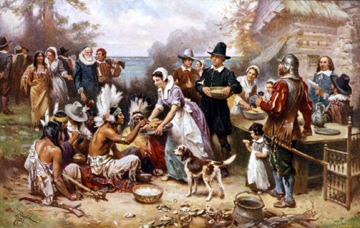
The First ThanksgivingHappy Thanksgiving! A lot of blogs are taking the day off today, but we thought we’d stay true to our name. Thanksgiving is another day, so we have another job.

Do you wish you could go back to the First Thanksgiving at Plymouth Plantation or The Virginia Colony? Do you long for the days before electricity? When Thanksgiving turkey came from the wild? When your livelihood actually depended on the success of the Fall harvest?

After you graduate, why not go back in time? Both Plimoth Plantation (yes, that’s how they spell it) and Colonial Williamsburg have job opportunities in their living history museums. If you love history, why not recreate it to help others learn? You can live like our forefathers did at the First Thanksgiving and get paid for it. Plimoth Plantation is currently hiring an Apprentice in 17th-Century Carpentry, while Colonial Williamsburg is hiring and auditioning for a number of positions. Both of these living museums have other job options, but why would you want to do anything other than be a colonial?

Read the full article →

Cool Culture

by on November 18, 2007

Cool Culture

Have you visited your college’s art museum lately? Gone to a student theatre production? Explored the library and looked at an exhibit on rare books? These are opportunities that you might be taking for granted, but many families have limited access to the cultural institutions that are commonplace on many college campuses.

Cool Culture is making New York City’s cultural institutions more accessible to low-income families. A solid education must extend beyond what kids learn in school, but visiting museums, wildlife centers, zoos, and botanical gardens can be both cost prohibitive and intimidating for a family with limited means. By building partnerships with many of these institutions, Cool Culture is able to offer a Family Pass that grants low-income families access to 71 cultural institutions in New York City. Member families are also provided with “a quarterly publication that provides a borough-by-borough listing of cultural attractions, including practical information on hours and public transportation, as well as a calendar of events especially geared toward families and young children.”

Read the full article →