Looking for an entry level job or internship in history? This is an overview of how to approach the search and a list of companies that might have relevant entry level and internship opportunities.
Monticello, the estate of Thomas Jefferson, is a national historic landmark just outside of Charlottesville, Virginia. Like any home, its interior design reflects the personal ideals of its owner; for example, Jefferson considered furniture to be a waste of space, so the dining room table was only put up during mealtimes and the beds were built into alcoves cut into thick walls that contained storage space. Since 1923 the estate has been owned and operated as a museum and educational institution by the Thomas Jefferson Foundation. The preservation of this home was only possible with the work of Historians. Historians piece information together into a picture of what places were like during an era of the past.
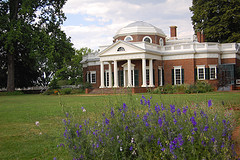
Photo Credit: Flickr user Southern Foodways Alliance
A Historian studies and writes about the past. They are concerned with the continuous, methodical narrative and research of past events as relating to the human race; as well as the study of all history in time. To accomplish this they are trained to analyze tons of information in sources such as government and institutional records, newspapers, photographs, interviews, and films, and make use of statistical methods and computerized data. Some historians, commonly called Archivists, collect historical documents and objects for museums, special libraries, historical societies, and other organizations to prepare exhibits and organize materials. Other historians are involved in the preservation of historic buildings and working for government agencies or historical societies. Historians also edit history textbooks and magazines for publishing firms. In the world of media, they can serve as consultants for radio, television, and film producers.
Historians spend most of their time in offices, classrooms, and libraries. While their hours are flexible, they often work more than forty hours per week. Some typical tasks include:
A Historian’s salary is around $44,490 per year, but can range between $25,108-$107,134. Most historians advance by increasing their skills and publishing books and articles to win the recognition of other scholars.
Here are some great locations for historians to work:
To be a Historian you’ll need a bachelor’s degree in History and typically a Masters or Ph.D. as well (as universities now generally require a Ph.D. for new full-time hires and a Masters degree for part-timers). In addition you should take courses in the language and literature of the area and period you plan to specialize in. You may also want to take courses in statistics. Regardless of your education, you’ll need to be detail-oriented, patient, organized, and have excellent communication skills to work well with other historians, students, and the public. Historians must also be able to focus for long hours while reading and studying.
If history still sounds like your cup of tea, here are a few things you should do to get started.
| Intake Worker The Breathing Association Columbus, OH | View |
| WORK AT HOME Amazon Plain City, OH | View |
| WORK FROM HOME FedEx Reynoldsburg, OH | View |
| Creative Director Sawhorse Productions Columbus, OH | View |
| FITNESS DESK REP (EVENINGS/WEEKENDS!) SPOOKY NOOK SPORTS Columbus, OH | View |
| WATERMAN HORTICULTURE - STUDENT ASSISTANT 2 The Ohio State University Columbus, OH | View |
| LIVESTOCK WORKER/ RANCH HAND Confidential Columbus, OH | View |
| 2ND SHIFT FULFILLMENT ASSOCIATE Mom's Meals Columbus, OH | View |
| ONLINE ORDERFILLING & DELIVERY Walmart Columbus, OH | View |
| ENTERTAINMENT RIGGER/STAGE HAND Disney Columbus, OH | View |






























Check out the latest job and internship postings in history.

